
Last updated: October 27, 2026
Key Takeaways
- Choose a caregiver when support is mostly non-medical and flexible.
- Choose a home health aide when daily personal care is the main need.
- The task list usually makes the difference clear.
- A caregiver often fits household help and companionship best.
Quick Answer
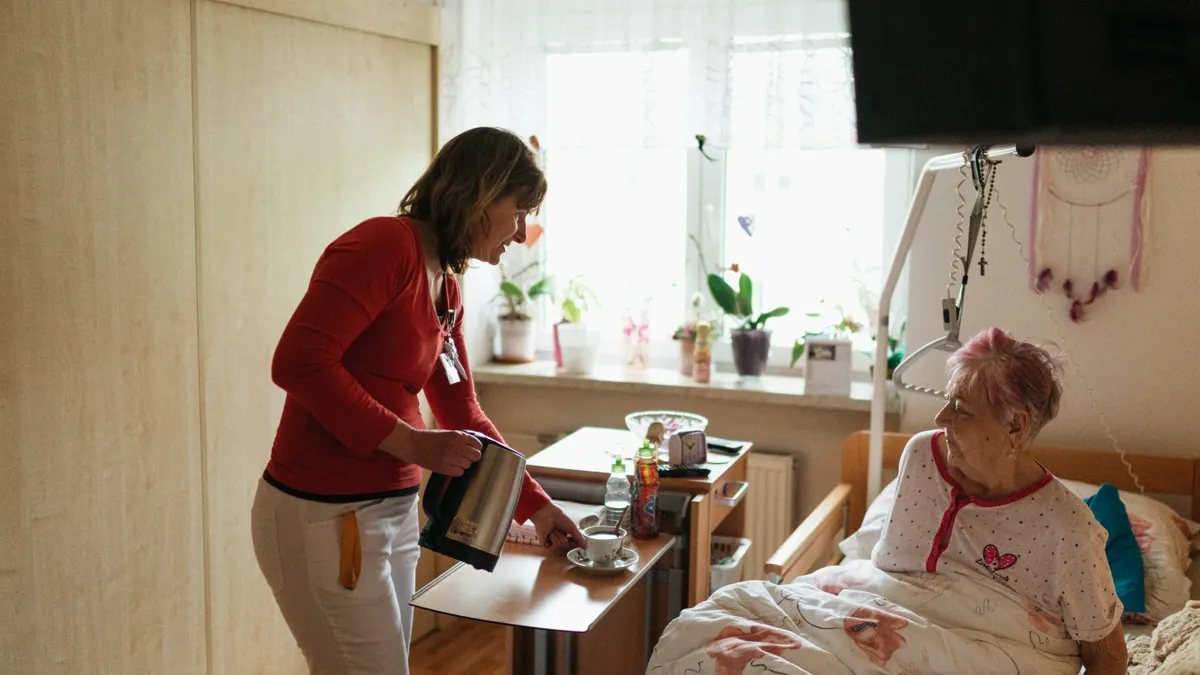
Quick answer: for caregiver vs home health aide, the better choice depends on the tasks. If the person needs bathing, dressing, toileting, or transfers, a home health aide is usually the better fit. If the person mainly needs meals, rides, shopping, and companionship, a caregiver is often enough.
A home health aide is the better fit when the person needs hands-on help with bathing, dressing, transfers, toileting, or other personal care that belongs in a care plan. A caregiver is the broader term, and it can mean anything from family help at home to a paid companion who does errands and light housekeeping. For this caregiver vs home health aide question, the distinction is practical and specific.
I write on home care because families usually run into this question when a parent starts missing meals, skipping showers, or struggling after a hospital stay. The mistake is often treating the two roles as interchangeable, so it helps to consult a professional about what the person actually needs. They are not. See Medicare’s home health services page and the U.S. Department of Labor’s home health care workers fact sheet: Medicare.gov and U.S. Department of Labor.
The short answer: one role is narrower and more formal
The difference is scope. A caregiver can be an informal family helper or a paid non-medical aide; a home health aide is a trained role with defined personal-care duties and, in many settings, supervision tied to a care plan. That distinction matters because it changes what the person can safely be asked to do, how the work is organized, and what kind of support a family can expect.
If the need is companionship, meal prep, transportation, laundry, or help around the house, caregiver is often the right word. If the need is help getting out of bed, using the toilet, bathing, changing clothes, or moving safely from bed to chair, home health aide is usually the better match. The federal Medicare glossary describes home health aide services as part of skilled home health care delivered under a plan of care, which is a very different structure from a neighbor, daughter, or paid companion helping out on their own schedule. See the Medicare description of home health services and the U.S. Department of Labor’s definition of home health and personal care aides for the role split: Medicare.gov and U.S. Department of Labor.
The practical takeaway is simple: if the job description is mostly “keep life running,” caregiver is enough. If the job description includes intimate personal care, home health aide is the cleaner, safer category.
What a caregiver usually does, and where the limits are
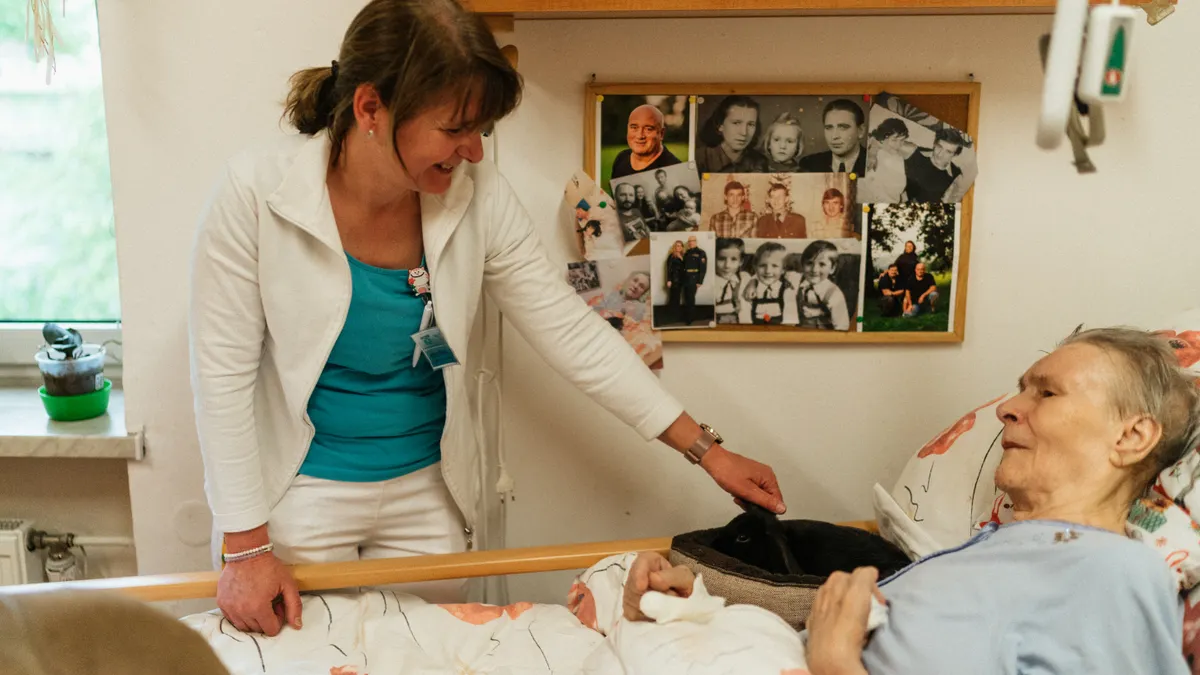
A caregiver wins when the person needs flexible, non-medical support rather than structured personal care. That can include family caregiving, where the “caregiver” may be a spouse, adult child, neighbor, or friend. It can also include a paid companion or homemaker. The term is broad on purpose.
That broadness is the strength. A caregiver can often step in quickly, adapt to changing routines, and handle tasks that do not require special certification: shopping, driving, making meals, organizing medications by reminder, walking with someone for safety, or helping with light housekeeping. In many households, the caregiver is also the one who notices the first real problem, such as new confusion, weight loss, or a fall risk on the stairs.
The weakness is just as important: “caregiver” does not tell you what the person is trained to do. It does not guarantee formal instruction in safe transfers, skin care, bowel and bladder routines, or infection-control basics. It also does not imply any licensed medical scope. That matters because family members often drift into tasks they are not comfortable doing and then feel trapped when the person’s needs escalate. A caregiver can become the whole safety net without ever being the right tool for hands-on personal care.
This role is right for families who want support with daily life, not hands-on body care. It is not the right choice if the person needs frequent bathing help, has limited mobility, uses a gait belt, or needs consistent assistance after surgery or a stroke. A caregiver may still be part of the plan, but not the whole plan.
What a home health aide is, and why the title matters
A home health aide is the better choice when a person needs direct personal assistance at home, not just help staying organized. In many settings, the aide is trained to help with bathing, grooming, dressing, toileting, ambulation support, and related personal-care tasks as directed by a nurse or care plan. That is the point of the role: close, hands-on support in the home.
The strength here is specificity. The title tells the family that this is not just “someone who helps around the house.” It signals a more formal training path and a clearer scope. The U.S. Department of Labor groups home health aides and personal care aides together in one occupational family, but the everyday distinction still matters: home health aide is the better phrase when the person’s day turns on bodily assistance, not errands. That clarity helps families ask for the right kind of help from the start.
The weakness is that the role is narrower than people sometimes assume. A home health aide is not a substitute for skilled nursing, and the title should not be treated as permission for medical tasks outside the care plan. Families sometimes assume “home health” means the aide can handle injections, wound treatment, medication changes, or clinical judgments, but if those needs are present, consult a clinician or nurse about the right service. That is how misunderstandings happen. If the person needs active medical management, the right conversation is with a clinician, not just an aide coordinator.
This role fits best when daily personal care is the main barrier to safe living at home. It is not always the best fit if the person mostly needs companionship, occasional rides, or a hand with groceries. In those cases, the formality of a home health aide can be more than the situation requires.
Caregiver vs home health aide: the side-by-side version
The difference becomes obvious when the task list is real. A caregiver can be the right answer for errands and supervision; a home health aide is the right answer for personal care and safe assistance with the body itself.
| Criteria | Caregiver | Home health aide | Winner for [condition] |
|---|---|---|---|
| Personal care such as bathing and dressing | May help, but not always trained or assigned for this | Core part of the role in many care plans | Home health aide for hands-on ADL support |
| Meal prep and light housekeeping | Common and often the main job | Often included, but not the main reason to hire | Caregiver for household support |
| Mobility help and transfers | Possible, but training varies widely | More likely to be trained for safe assistance | Home health aide when fall risk is a concern |
| Supervision and companionship | Very common | May provide it, but usually alongside personal care | Caregiver for social support |
| Medical tasks | Not a role guarantee | Still limited; not the same as nursing | Neither for skilled medical care |
| Care-plan structure | Informal or loosely defined | More formal, often tied to a plan of care | Home health aide for coordinated home care |
| Family involvement | Often family-led | More often coordinated with an agency or clinician | Caregiver for informal arrangements |
| Speed and flexibility | Can be arranged informally faster | May require agency onboarding and scheduling | Caregiver when help is needed immediately |
| Need for documentation or oversight | Usually minimal | More likely to involve supervision and records | Home health aide for accountability |
The table shows the real dividing line: caregiver is broader and looser, while home health aide is narrower and more structured. A family should pick the label that matches the job, not the one that sounds nicer. Using the wrong title can lead to bad expectations, especially around personal care and safety.
Which role is right for daily support?
Choose a caregiver if the person mainly needs help keeping the household moving. Choose a home health aide if the person needs direct personal care and can no longer manage basic daily tasks safely alone. That answer is cleanest when the need is easy to name: groceries, rides, meals, and company point toward caregiver; bathing, dressing, toileting, and transfer help point toward home health aide.
The daily-life difference is where families feel the consequences. A caregiver can preserve routine and reduce isolation, especially for someone who is lonely but still physically independent. A home health aide can preserve dignity and reduce fall risk when the person is physically dependent on help to get through the day. Those are not the same problem.
This is also where family caregiving deserves a mention. Family caregivers often start as the default and then absorb more work than expected. That works for a while, but it can fail quietly: missed showers, skipped meals, back strain from lifting, and resentment that nobody planned for. When that pattern starts, the question is no longer “Who can help?” It is “What role matches the need before somebody gets hurt?”
One useful rule: if the task can be written as “do the house work” or “keep me company,” caregiver is usually enough. If the task can be written as “help me with my body,” home health aide is the better fit. That distinction is simple, but it saves families from hiring the wrong kind of support.
When the choice flips
The verdict changes in a few specific situations.
First, if the person only needs short-term help after a minor setback and does not need personal care, a caregiver can be the smarter choice. A person recovering enough to walk independently but needing meals, rides, and someone nearby may not need the formal structure of a home health aide.
Second, if the person needs hands-on assistance every day, the choice flips hard toward a home health aide. Bathing, toileting, and safe transfers are not “extra help”; they are the core need. The more intimate the task, the less useful a generic caregiver label becomes.
Third, if family members are already providing the bulk of the care, the outside help should fill the real gap, not duplicate what the family is doing. A caregiver can cover errands while a daughter handles personal care. A home health aide can cover morning routines when the family cannot be there before work. Matching the role to the gap matters more than the title.
Fourth, if the person’s condition is changing quickly, neither role should be treated as the final answer without professional input. New confusion, repeated falls, wounds, fever, or sudden weakness call for medical evaluation, not a better chore list. Home support helps, but it does not replace clinical judgment.
The verdict: which one to choose and why
Choose a home health aide if the person needs regular help with bathing, dressing, toileting, walking, or other personal-care tasks that require trained hands on a predictable schedule. Choose a caregiver if the person mainly needs non-medical support such as meals, rides, companionship, shopping, and light housekeeping. Neither if the real problem is a medical issue that needs nursing, therapy, or urgent evaluation.
That is the plain answer. For daily living support, the better label is the one that matches the hardest task on the list, not the easiest one.
Can a caregiver help with bathing?
Yes, but only if the caregiver is comfortable, trained, and legally allowed to do so in that setting. A caregiver is a broad term, so bathing help is not guaranteed the way it is more clearly associated with a home health aide. If bathing is frequent, intimate, or tied to mobility risk, a home health aide is usually the safer fit.
Does a home health aide provide medical care?
No, not in the way a nurse does. A home health aide typically helps with personal care and other non-medical tasks within a care plan, but not with skilled medical treatment, diagnosis, or clinical decision-making. If the need is wound care, injections, or medication changes, a licensed clinician should be involved.
Which role is right for daily support?
A caregiver is right for daily support when the person needs help with routines, errands, meals, and companionship. A home health aide is right for daily support when the person needs direct assistance with bathing, dressing, toileting, or transfers. If the support needed is mostly physical and personal, the aide is the better match.
Drafted with AI; not yet reviewed by a person.