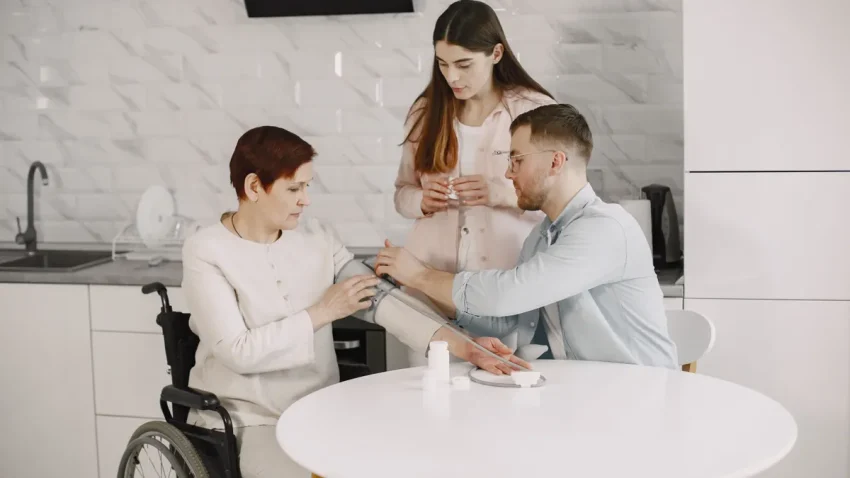
Last updated: October 29, 2026
Quick Answer: In home healthcare vs hospice: how they differ, the choice usually comes down to one number: six months. Hospice Medicare eligibility is tied to a doctor’s certification that life expectancy is six months or less if the illness runs its usual course, while home health is tied to skilled need and being homebound. If you are deciding between them, consult a clinician or case manager, because the right path depends on the patient’s goals and diagnosis. Medicare.gov Medicare.gov
Key Takeaways
- Home healthcare usually fits when skilled treatment is still needed and recovery is realistic.
- Home healthcare is for medical recovery; hospice is for comfort-focused care near the end of life.
- Home healthcare works best when the patient still has a goal of improvement or stabilization.
- Hospice fits when pain, breathlessness, nausea, anxiety, or other serious symptoms need comfort-focused care.
Hospice care is usually the right choice when the goal is comfort, not cure; home healthcare is usually the right choice when the goal is recovery, rehab, or medical management at home. The confusion is common because both can happen in the home, but they serve different clinical purposes, use different care teams, and are covered under different rules. If the choice is unclear, ask the treating clinician or a discharge planner.
I write on end-of-life and care-planning topics, and the quickest way to make the wrong choice is to focus on the setting instead of the goal.
The real difference between home healthcare and hospice

Home healthcare wins when the patient still needs skilled treatment with a path back to improvement, but a clinician should confirm whether home health is appropriate. Hospice care wins when the illness is advanced, the focus has shifted to comfort, and curative treatment is no longer the center of care; again, the medical team should guide the decision. That is the decision that matters most.
The two models can look similar from the outside: nurses visit the home, plans are coordinated, and family caregivers still do a lot of the day-to-day work. The split is in intent. Home healthcare is built around skilled services such as nursing, wound care, medication management, and therapy after an illness or surgery. Hospice care is built around symptom relief, caregiver support, and quality of life when a serious illness is no longer responding to curative treatment.
Medicare’s home health coverage is tied to skilled need and being homebound, while the Medicare hospice benefit is tied to a doctor’s certification of terminal illness with a life expectancy of six months or less if the disease runs its usual course. That six-month standard is the clearest line in the sand, even though real life is messier than a form. Medicare.gov Medicare.gov
A useful shorthand is this: if the question is “How do I get stronger or safer at home?” think home healthcare. If the question is “How do I keep this person comfortable and supported now?” think hospice care. For a broader explainer of the home-care side, see what home healthcare is. For the comfort-care side, see palliative care vs hospice.
What each model is trying to do
Home healthcare wins for medical recovery; hospice care wins for comfort-focused care at the end of life. That difference shapes everything else, from who comes to the house to which services are emphasized.
Home healthcare is usually ordered after a hospitalization, new diagnosis, or change in function. A patient may need a skilled nurse to monitor a condition, a physical therapist to rebuild strength, or an occupational therapist to make daily routines safer. The point is progress. Even when the patient has a chronic disease, the plan usually asks, “What can improve?”
Hospice starts from a different question: “What will help most now that the illness is not likely to be cured?” That usually means symptom control, emotional support, caregiver coaching, medication review for comfort, and help with difficult decisions. Hospice teams are also built to respond to the family, not just the patient.
A generic article often says both are “provided at home,” which is true but not useful. The real distinction is the care plan. Home healthcare is episodic and skill-driven. Hospice is comfort-driven and family-centered. That difference shows up in visit patterns, documentation, and the kinds of problems the team expects to solve.
Home healthcare: when it fits, and when it does not
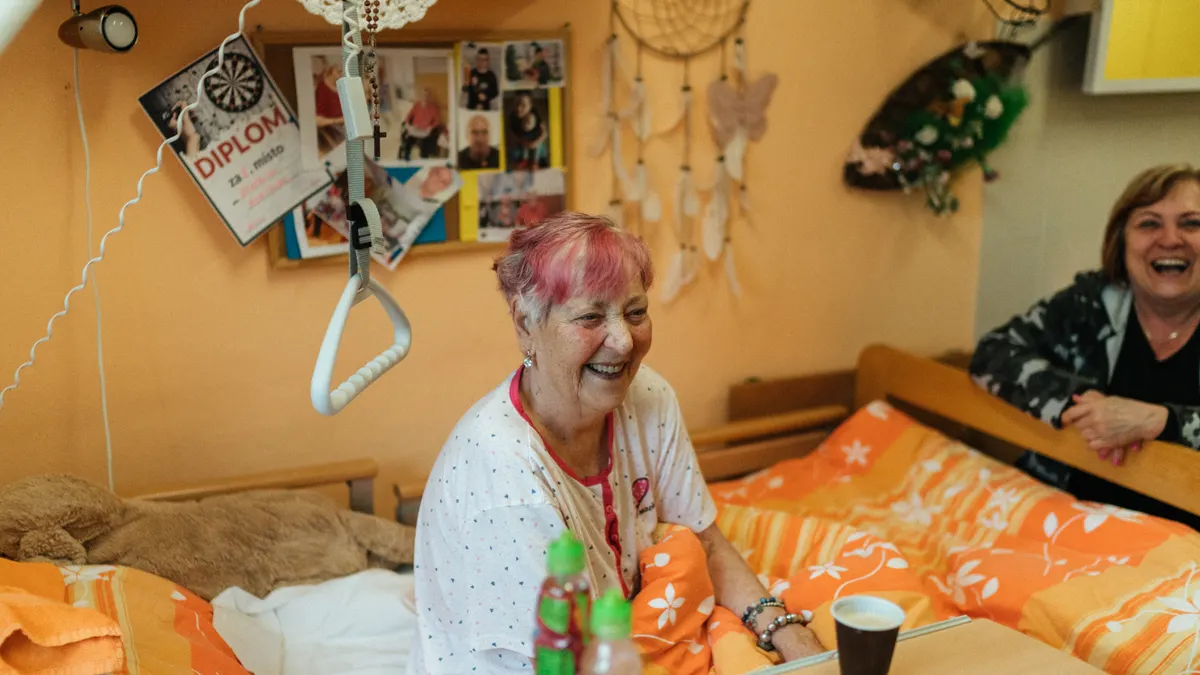
Home healthcare wins for people who still have a realistic recovery or stabilization goal and need skilled care to get there. That often includes someone leaving the hospital after surgery, stroke, pneumonia, or a flare of a chronic illness, where nursing oversight or therapy at home is safer than trying to manage alone.
The strengths are practical. A nurse can monitor vitals and medications. A therapist can work on transfers, balance, gait, or self-care. The home setting lowers the burden of travel, which matters when stamina is poor. Medicare’s home health benefit is designed around these skilled services, not custodial help. Medicare.gov
The weakness is just as important: home healthcare is not a long-term substitute for round-the-clock personal care. It is usually intermittent, not continuous. It also does not mean the patient can stay in home healthcare indefinitely if the main need becomes non-skilled help with bathing, meals, or supervision. If the clinical goal has shifted from recovery to comfort, the model starts to fit poorly.
This is the wrong choice for someone whose disease is advancing and whose main needs are symptom relief, caregiver support, or end-of-life planning. It is also the wrong choice if the family wants a program that openly centers dying, prognosis discussions, and bereavement support. That is hospice territory, not home health territory.
Hospice care: where it wins, and what it asks you to accept
Hospice care wins when the clearest need is relief from pain, breathlessness, nausea, anxiety, or other burdens of serious illness, and the medical team agrees the focus should be comfort. The model is built for that moment. It is not a lesser version of care; it is a different target altogether.
Hospice is usually delivered where the patient lives: home, assisted living, or a nursing facility, depending on the setting and the hospice arrangement. A multidisciplinary team may include a nurse, physician or medical director, social worker, chaplain or spiritual support, home health aide, and volunteer support depending on the program. That mix is not decorative. It is there because end-of-life care is clinical, emotional, and practical at the same time.
The biggest strength is coordination. Hospice teams can simplify medication lists, prepare the family for likely changes, and respond when symptoms escalate. Many families also value that hospice names the situation plainly instead of treating every decline as a puzzle to be fixed.
The trade-off is the one people avoid saying out loud: hospice is not for patients who are still pursuing cure-directed treatment for the terminal illness. It can also be emotionally hard to start because accepting hospice means accepting the likely direction of the illness. Families sometimes delay too long because they think hospice means “giving up.” That is the wrong frame, but the feeling is real.
Hospice is also not the right fit if the main concern is rehabilitation or a return to prior function. If a person still has a meaningful recovery goal, hospice may be premature.
Home healthcare vs hospice: the honest side-by-side
Home healthcare wins for recovery and skilled treatment; hospice wins for comfort and support when the illness is advanced. Here is the practical comparison families usually need before they can choose.
| Criteria | Home healthcare | Hospice care | Winner for this condition |
|---|---|---|---|
| Main goal | Restore function, stabilize, or manage a condition | Comfort, symptom relief, and quality of life | Depends on goal |
| Typical trigger | Hospital discharge, new decline, rehab need | Advanced illness with limited life expectancy | Hospice for end-of-life focus |
| Treatment stance | Curative or restorative care remains active | Curative treatment is no longer the center | Depends on treatment goals |
| Care team | Nurse, therapist, sometimes social work | Nurse, physician, aide, social worker, chaplain | Hospice for broader support |
| Visit type | Intermittent skilled visits | Intermittent visits plus coordinated support | Hospice for caregiver burden |
| Setting | Home, if the patient meets homebound and skilled-need criteria | Home, assisted living, or nursing facility | Hospice for flexible placement |
| Family support | Helpful, but often centered on tasks and clinical follow-up | Strong emphasis on caregiver coaching and bereavement support | Hospice |
| Length of need | Often episodic and tied to progress | Ongoing while the patient remains eligible | Home healthcare for recovery period |
| Best use case | Wound care, therapy, medication monitoring | Pain control, breathlessness, terminal illness support | Depends on the care question |
A table cannot capture the emotional part, but it can surface the decision rule: if the plan is still “get better,” home healthcare usually fits. If the plan is “keep comfortable and supported,” hospice usually fits better.
For the clinical framework behind hospice, the National Institute on Aging and the Medicare Hospice Benefit page on Medicare.gov are good starting points. For home-based skilled care rules, Medicare’s home health coverage page is the cleaner reference. National Institute on Aging Medicare.gov Medicare.gov
Where palliative care fits between them
Palliative care often wins when the illness is serious but the decision is not yet hospice. It can sit alongside curative treatment, which is why families confuse it with hospice and then delay both.
Palliative care is not the same as hospice, even though both can focus on symptom relief. The key difference is timing and eligibility. Palliative care can begin at any stage of a serious illness and can be used while treatment aimed at cure or control is still going on. Hospice is narrower and usually comes later, when the prognosis has shifted and the comfort plan is the priority.
This middle ground matters because some patients need help with pain, fatigue, shortness of breath, or treatment side effects long before they are hospice-eligible. Palliative care can also help with goals-of-care conversations, which is often the moment families need most. The common mistake is assuming the choice is binary: hospital care or hospice. It is not. Palliative care is often the bridge.
The drawback is that palliative care availability varies more than families expect, and it can be confused with “giving up” just as hospice is. It also does not replace the practical support structure that hospice provides when the end of life is near.
Which care path should you choose right now?
Choose home healthcare if the patient still has a recovery goal, needs skilled nursing or therapy, and is not primarily in an end-of-life phase. Choose hospice care if the illness is advanced, curative treatment is no longer the focus, and the priority is comfort, symptom control, and family support. Neither if the real need is around-the-clock custodial care without a skilled or terminal-illness basis.
The cleanest way to decide is to ask one question: “What is the care team trying to achieve in the next few weeks?” If the answer is function, stability, or rehab, home healthcare fits. If the answer is comfort, less suffering, and support through the final stage of illness, hospice is the better path.
The hard part is that families often want both. That is not the same as being able to get both under one plan. The care goal has to lead the decision, not the location.
When the choice flips
Hospice can become the better option even after home healthcare starts if the patient stops improving or keeps landing back in crisis. A repeated cycle of hospital discharge, decline, and another discharge often signals that recovery is no longer the main story.
Home healthcare can be the better option even when the diagnosis is serious if the prognosis is not clearly limited and the patient is still making functional gains. A person with advanced heart failure or COPD may still benefit from therapy, medication management, and reassessment before hospice is appropriate.
Palliative care can also change the picture. If symptoms are the main issue but the patient still wants disease-directed treatment, palliative care may fill the gap while the family decides whether hospice is the next step. That is often the most underused option in the middle of the road.
One more flip scenario matters: some families call everything “hospice” once care is happening at home. That language error can delay proper home health services, or it can delay a timely hospice referral. The label matters because the benefits, eligibility rules, and team structure are not the same.
Can someone receive home healthcare and hospice at the same time?
Usually no, not for the same terminal condition under Medicare rules. The answer depends on the exact services, the payer, and whether the care is being provided for the same diagnosis. Hospice is built around a comfort-focused terminal-illness plan, while home healthcare is built around skilled treatment and recovery. A clinician or case manager should sort the overlap.
Who qualifies for hospice?
Hospice is for patients with a terminal illness when a physician certifies that life expectancy is likely six months or less if the disease follows its usual course. That is the broad rule, but the exact clinical documentation matters. Because eligibility can turn on details, families should confirm the specifics with the hospice team and the treating clinician. Medicare.gov
Which is better for end-of-life care?
Hospice care is generally better for end-of-life care. It is designed for comfort, symptom relief, and support for both patient and family when the focus has shifted away from cure. Home healthcare can still help with skilled needs, but it is not built around the same end-of-life goals or support structure.
Drafted with AI; not yet reviewed by a person.